Cleaning Jobs in the USA for Foreigners with Visa Sponsorship
The promise of a new life and work opportunities in the USA is a powerful magnet for individuals worldwide. Many envision starting fresh, and for some, roles such as cleaning jobs present an accessible entry point. However, the reality of obtaining visa sponsorship for general Cleaning Jobs in the USA for Foreigners with Visa Sponsorship is exceptionally challenging and, for most roles, not a viable direct pathway.
The U.S. immigration system is complex and primarily designed to attract highly skilled professionals, those with advanced degrees, or individuals filling very specific labor shortages.
This comprehensive guide aims to provide a realistic overview of the U.S. immigration landscape, explain why direct sponsorship for cleaning jobs is rare, and outline the actual (albeit indirect) routes foreign nationals might take to live and work in the U.S. legally. We will cover the types of visas available, the role of employers, the importance of qualifications, and common misconceptions, culminating in FAQs to address key concerns.
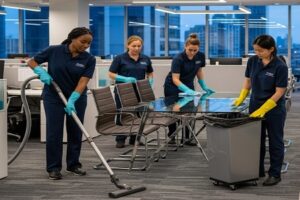
The Realities of Cleaning Jobs in the USA for Foreigners with Visa Sponsorship
Let’s address the core misconception upfront: direct visa sponsorship for general cleaning jobs in the USA is highly improbable under current immigration laws. Here’s why:
- Immigration Focus: U.S. employment based visas (like the H-1B, H-2B, or EB categories) are generally reserved for:
- Highly Skilled Workers (H-1B): Professionals in specialty occupations requiring at least a bachelor’s degree in a specific field (e.g., IT, engineering, medicine). General cleaning roles do not qualify.
- Temporary Non-Agricultural Workers (H-2B): For temporary or seasonal non-agricultural work where there are not enough U.S. workers available. While this could theoretically include some specialized industrial cleaning or hospitality roles in specific, verified shortage situations, it is highly regulated, has very limited annual caps, and is intensely competitive. It’s almost never for typical residential or office cleaning.
- Workers with Extraordinary Ability (O-1): For individuals with extraordinary ability in their field.
- Green Card (Permanent Residence): Often requires a sponsor for a permanent, skilled role, significant investment, or family ties.
- Labor Certification: For many employment-based visas (and Green Cards), employers must go through a “labor certification” process (PERM) with the Department of Labor. This involves proving that there are no qualified U.S. workers available, willing, and able to do the job. Given the large pool of U.S. citizens and permanent residents available for cleaning roles, proving a labor shortage for general cleaning is virtually impossible.
- Prevailing Wage Requirements: Employers sponsoring foreign workers must pay at least the “prevailing wage” for that occupation and location. For general cleaning roles, this wage is often low, but the administrative burden and legal costs of sponsorship are high, making it economically unfeasible for most employers to sponsor someone for such a position.
Therefore, individuals seeking to work in cleaning services in the U.S. must usually secure their legal right to work through other means.
Alternative (Indirect) Pathways to Cleaning Jobs in the USA for Foreigners with Visa Sponsorship
Since direct sponsorship for cleaning jobs is unlikely, foreign nationals typically access such employment after they have obtained legal work authorization through a different visa category. Here are some of the more common (though still challenging) routes:
- Spousal/Family Sponsorship (Family-Based Visas):
- If you have a U.S. citizen or Legal Permanent Resident (Green Card holder) spouse, parent, or (in some cases) sibling, they might be able to sponsor you for a family-based Green Card.
- Once you receive a Green Card, you become a Legal Permanent Resident and are authorized to work in any job, including cleaning, without needing an employer sponsor.
- Challenge: This pathway depends entirely on having eligible family ties in the U.S. and can take many years, depending on the relationship and country of origin.
- Student Visas (F-1) with Work Authorization (CPT/OPT – Limited):
- Foreign students on an F-1 visa can sometimes obtain limited work authorization for “Curricular Practical Training (CPT)” or “Optional Practical Training (OPT)” related to their field of study.
- However, cleaning jobs are generally not considered related to most academic fields of study. While a student might be able to take an on-campus job (like cleaning dorms or facilities) under specific rules, this is usually part-time, temporary, and meant to support their studies, not as a primary pathway to long-term employment in cleaning off-campus.
- Challenge: This is a student visa, not an employment visa, and work authorization is highly restricted and temporary. It’s not a route to permanent cleaning jobs.
- Asylum or Refugee Status:
- Individuals granted asylum or refugee status in the U.S. are authorized to work in any job.
- Challenge: This is a humanitarian pathway for those genuinely fearing persecution, not an employment immigration strategy.
- Diversity Visa Lottery (Green Card Lottery):
- The U.S. offers a limited number of Green Cards each year through a lottery program to individuals from countries with historically low rates of immigration to the U.S.
- If selected and successfully processed, you receive a Green Card and can work in any job, including cleaning.
- Challenge: This is purely a lottery, highly competitive, and requires meeting specific educational or work experience criteria. You cannot apply if you are from an ineligible country.
- Temporary Work Visas (e.g., H-2B – Highly Specific & Rare for Cleaning):
- As mentioned, the H-2B visa is for temporary, non-agricultural work.
- In extremely rare and specific circumstances, an employer might be able to demonstrate a seasonal or peakload need for specialized cleaning services (e.g., resort cleaning, commercial cleaning for a specific event) where no U.S. workers are available.
- Challenge: This is subject to annual caps, complex labor certification, and proof of temporary need. It is not for year-round, general cleaning. Employers often prioritize workers who have previously held H-2B visas.
The Application Process for Indirect Pathways (General Overview)
Since direct visa sponsorship for cleaning is not feasible, the “application process” would align with the visa category you are pursuing.
For Family Based Green Cards:
- Petition: Your U.S. citizen or Green Card holder relative files Form I-130 (Petition for Alien Relative) with USCIS.
- Approval & Visa Availability: Once approved, you wait for your visa to become available (this can take years).
- Application: You apply for an immigrant visa at a U.S. embassy or consulate abroad (consular processing) or adjust status if already in the U.S. legally.
- Green Card: Upon approval, you receive your Green Card and can work in any job.
For the Diversity Visa Lottery:
- Entry: Submit an entry during the annual registration period (typically October/November).
- Selection: If selected, you receive notification and must proceed with further application steps.
- Interview: Attend an interview at a U.S. embassy or consulate.
- Green Card: If approved, you receive your Green Card.
Finding “Cleaning Jobs” Once Legally Authorized to Work
Once you have secured legal work authorization (e.g., through a Green Card, asylum status, or a spouse’s work visa that grants you dependent work authorization), finding cleaning jobs is much like it is for a U.S. citizen.
- Online Job Boards: Indeed, ZipRecruiter, Monster, Craigslist (use caution).
- Cleaning Companies: Direct application to local cleaning services (residential, commercial, industrial).
- Hospitality Sector: Hotels, resorts, hospitals often have large cleaning staffs.
- Referrals: Word of mouth, local community connections.
- Starting Your Own Business: With legal work authorization, you could start your own cleaning business.
Important Considerations for Foreign Workers
- English Language: While not always a formal visa requirement for all routes, strong English communication skills are invaluable for finding employment, navigating daily life, and preventing misunderstandings.
- Qualifications and Experience: For any skilled pathway, ensure your educational qualifications are recognized and that you have verifiable work experience.
- Beware of Scams: Be extremely cautious of anyone promising guaranteed cleaning jobs with visa sponsorship for a fee. Legitimate employers will not ask you to pay for your visa or job offer. Visa fees are paid directly to the U.S. government.
- Legal Advice: U.S. immigration law is incredibly complex. Always seek advice from a qualified and licensed immigration attorney if you are serious about immigrating.
Frequently asked questions about cleaning jobs in the USA for foreign workers
- Can an employer directly sponsor a foreigner for a general cleaning job? Direct visa sponsorship for general cleaning positions (such as house or office cleaning) is extremely rare and highly unlikely. The U.S. immigration system primarily prioritizes highly skilled workers or those filling very specific, verified labor shortages under programs with limited availability.
- What is the H-2B visa, and can it be used for cleaning jobs? The H-2B visa is for temporary, non-agricultural workers. While it can technically apply to some specific, non-agricultural roles, it is rarely used for general cleaning. An employer would have to prove a temporary labor shortage and that no U.S. workers are available, which is very difficult for a standard cleaning position.
- What is the EB-3 visa for unskilled workers? Is that a viable option? The EB-3 “Other Workers” category is a pathway to a Green Card for “unskilled” jobs requiring less than two years of experience. While some cleaning roles may fall into this category, the process is lengthy, expensive for the employer, and requires a labor certification that proves no U.S. workers are available. It is not a common or easy path.
- Are there other visas that could allow me to work in cleaning? Yes, but these are indirect routes. A foreign worker could find a cleaning job if they first secure a visa that grants them a general work permit, such as a Green Card through a family-based petition, a dependent visa (e.g., as a spouse of a skilled worker), or through the Diversity Visa Lottery.
- What about working as a student on an F-1 visa? F-1 student visas do not permit working off-campus in general roles during the first academic year. After that, limited work is allowed for “Optional Practical Training” (OPT) or “Curricular Practical Training” (CPT), which must be directly related to the student’s field of study. Cleaning jobs are generally not considered relevant to academic programs.
- How long does it take to get a work visa for a cleaning job? There is no standard timeline because a direct visa for this role is not typical. The time frame depends entirely on the visa you are pursuing indirectly. A family-based Green Card can take many years, while a limited H-2B visa is temporary and has a specific, and often short, application window.
- What are the biggest red flags to look out for in visa sponsorship offers? Be extremely cautious of any individual or company that promises a guaranteed visa or a job in exchange for a fee. Legitimate employers will not ask you to pay for your visa or sponsorship. All visa fees are paid directly to the U.S. government.
Also Read: Top Romantic Luxury Hotels for Anniversary Trips in the US
Conclusion of Cleaning Jobs in the USA for Foreigners with Visa Sponsorship
While the desire for cleaning jobs in the USA with visa sponsorship is understandable, the reality is that direct sponsorship for such roles is not a standard feature of the U.S. immigration system. Employment-based visas are overwhelmingly geared towards higher skilled professions.
Foreign nationals seeking to work in cleaning services in the U.S. must typically first secure their legal right to live and work through alternative, often complex, pathways such as family sponsorship, the Diversity Visa Lottery, or by accompanying a spouse on a visa that allows dependent work authorization.
Understanding these realities, managing expectations, and pursuing legitimate, often indirect, immigration routes are crucial for anyone hoping to build a life and career in the United States.
Pingback: High Paying Jobs in the UK and USA - D56 Site